A Simple Sales Funnel: What Small Sellers Actually Need
You don't need a ten-page funnel machine. A simple sales funnel for small businesses: traffic, a few questions, the right offer, and email for the not-ready.
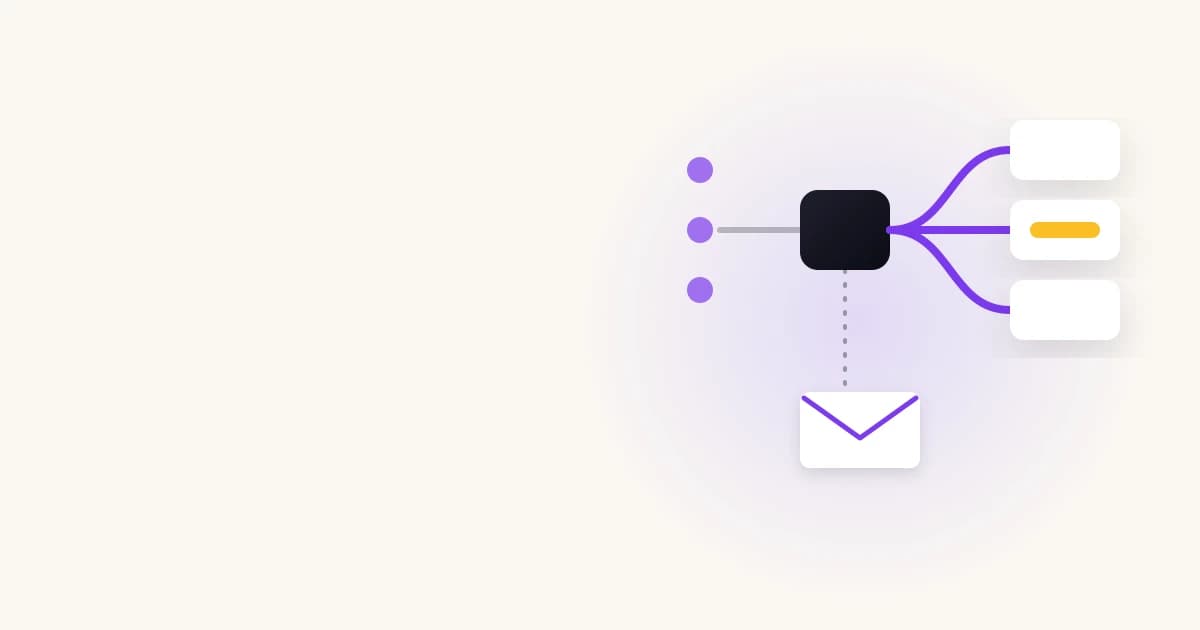
Search "how to build a sales funnel" and you'll find diagrams with ten pages, three upsells and a 30-day email sequence. Most small sellers don't need that. The simplest funnel that works is short: traffic, a few questions, the offer that fits, and a way to stay in touch with people who aren't ready. It's the idea behind ask before you sell, applied end to end.
What a sales funnel is, without the jargon
A sales funnel is the path from "someone saw you" to "someone bought". The name comes from the shape: many people at the top, fewer at each step, a few buyers at the bottom.
Every seller already has one, even if they never built it on purpose. A coach's funnel might be: Instagram post → link in bio → services page → "Book a call" → call → client. A store's: ad → product page → cart → checkout. The question isn't whether you have a funnel; it's where people drop out of it, and what you do about it.
That's why the useful way to think about funnels is by their steps and the share of people who pass each one. If 1,000 people reach your services page and 10 book, the step from page to booking is where the work is. The conversion rate calculator shows how to measure each step.
You already have a funnel; the job is finding the step where most people leave.
Why big funnel templates are often too much
Full funnel builders sell a complete machine: landing pages, order forms, upsell pages, email sequences, membership areas. For some businesses that's exactly right. For a small seller with one to five offers and modest traffic, it often creates problems:
- More steps, more exits. Every extra page is a place to leave.
- Months of setup. Writing ten pages and thirty emails delays the moment you learn whether the offer sells.
- Too little traffic to tune it. A machine with many steps needs a lot of visitors to tell which step is broken.
- One path for everyone. Many templates still push every visitor down the same sequence, whatever they need.
A simple funnel does the opposite: as few steps as possible, and the steps it has adapt to the visitor.
Fewer steps means fewer exits and faster learning.
The simplest funnel that works
Here's the shape, in four parts:
- Traffic you already have. Your bio link, posts, ads, emails, search visitors. No new channel needed to start.
- A few questions. Three to six, about the visitor's situation and goal. They replace the moment where a visitor stares at your offers and can't decide.
- A result that ends on the right offer. A short answer written for where they are, and one button to the offer that fits them: a checkout, a booking page, a quote form.
- A way to stay in touch with the not-ready. An optional email field before the result, or a small first offer, so the people who aren't buying today don't vanish.
That's it. Your existing sales pages, checkout and booking tools stay where they are; the funnel sits in front of them.
Traffic, questions, the right offer, and a door left open for the not-ready.
Simple funnel examples for four kinds of sellers
These are hypothetical, to show the shape. Your questions and offers will differ.
An online store
Say you sell coffee: a tasting sampler, espresso beans, a pour-over starter kit and a gift box.
- Traffic: Instagram ads and the shop link in bio.
- Questions: Who is it for? How do you make coffee at home? What are you hoping for?
- Results: beginners → sampler; espresso owners → espresso beans; curious about filter coffee → starter kit; gift buyers → gift box.
- Not ready: a discount code by email for the first order.
A course creator
Say you teach freelance designers to price their work: a foundations course, an advanced program and 1:1 coaching.
- Traffic: YouTube description links, newsletter, podcast mentions.
- Questions: How long have you freelanced? What's your biggest pricing problem? How much time do you have each week?
- Results: newer freelancers → foundations; experienced → advanced program; those who want feedback on their own proposals → coaching application.
- Not ready: a free pricing worksheet by email.
A service business
Say you're an operations consultant for small agencies: a fixed-price audit, a strategy call for larger engagements, and a $49 template pack.
- Traffic: LinkedIn posts and referrals landing on the services page.
- Questions: How big is your team? What's breaking most often? When do you want to start?
- Results: larger agencies ready now → book a call; smaller ones → the audit; early stage → the template pack.
- Not ready: a monthly email with one ops fix.
For more on the questions to ask before a call, see discovery call questions.
A software company
Say you sell invoicing software with a solo plan, a team plan and enterprise.
- Traffic: search, comparison sites, the pricing page.
- Questions: How many people will use it? What do you need first? Any integrations you can't live without?
- Results: solo → trial on the solo plan; teams → trial on the team plan; complex needs → book a demo.
- Not ready: a product tour by email.
Same shape every time: questions about the visitor, one offer per answer, something for the not-ready.
How to build it in an afternoon
- List your offers and, for each, who it's for. If you can't say who an offer is for, the funnel can't route to it either.
- Write down what tells those buyers apart. Experience, size, budget, goal, timing. Those become your questions.
- Keep it short. A cheap offer deserves two or three questions; an expensive one can take more, because visitors expect to be qualified.
- Write one result per offer that answers the doubt behind the answers ("yes, this works for a team of three") and ends on one button.
- Put the link where traffic already arrives: your bio, your ads, the main button of your sales page, your emails.
- Measure for a few weeks: how many people who start reach an offer, and how many buy or book, compared with the page on its own over the same number of weeks.
This is what Snacked is built for: you paste your page's address and it reads your offers, prices and links, then writes the questions and results. You share it as a link or put it on your site. Be clear about what it doesn't do compared with a full funnel builder: no page builder, no email sequences, no checkout or payments, no course hosting, and up to eight offers per funnel. Your existing tools handle those.
Offers first, questions second, and put the link where your visitors already click.
When a full funnel builder is the better choice
A simple funnel isn't always enough. All-in-one platforms bundle the pieces a simple funnel leaves to your existing tools. For example, ClickFunnels' pricing page lists a drag-and-drop page editor, email marketing with automations, checkout and course limits by plan, with plans starting at $97 a month billed monthly (ClickFunnels pricing, checked 2026-10-26). Systeme.io lists sales funnels, email marketing, courses and payments through Stripe or PayPal, with a free plan of up to 2,000 contacts and 3 funnels (systeme.io pricing, checked 2026-10-26).
Choose one of those when:
- You don't have a website, checkout or email tool yet and want them all in one place.
- You run launches with webinars, order bumps and long email sequences.
- Your business is built around a course or membership you need to host.
Choose the simple version when you already have pages, a checkout and an email tool, and the problem is that visitors arrive and leave without picking anything.
Buy the machine when you need the parts; put questions in front of what you have when you need people to choose.
Recap
- A sales funnel is the path from visit to purchase; you already have one, so start from where people drop out.
- The simplest one that works is traffic, a few questions, the right offer and a door for the not-ready, in front of the pages you already have.
- Build it from your offers outward, keep it short, and measure it against your page over equal weeks; for more on why asking works, see ask before you sell.
Not sure your sales page is ready to receive the visitors a funnel sends? Check it first with the free sales page grader.
Keep reading
Quiz vs Live Chat for Sales: Which Helps Visitors Buy?
Live chat answers any question but needs someone, or a bot, to reply. A short question funnel works at any hour but can't improvise. When each wins, and why.
Personalized Landing Pages: What Works When You're Not Amazon
Three ways to personalize a landing page: by traffic source, known data, or asking. What each needs in data, tools and traffic, and which fits a small site.
One Sales Page, Many Buyers: Send Each to the Offer That Fits
When different people visit the same sales page, one message can't fit them all. How to split them by asking, and send each one to the offer made for them.