Ask Before You Sell: How a Few Questions Help Visitors Buy
Why a few questions before the offer can sell more than a better page: how asking first works for services, courses and stores, the evidence, where it fails.
A good salesperson doesn't recite the same speech to every customer. They ask what you're looking for, then show you the thing that fits. Online, most sellers skip the asking: every visitor gets the same page, whatever they came for. This guide covers what changes when you ask first, how to do it for any kind of offer, what the evidence says, and where it goes wrong.
Why one page can't fit every visitor
Think about who lands on your sales page. Some are ready to buy. Some aren't sure the offer is for their situation. Some would buy, but can't tell which option is theirs. Some are a poor fit and should go somewhere else.
A page has to pick one message for all of them. Write it for beginners and experts feel talked down to. Lead with the premium plan and price-sensitive visitors leave; lead with the cheap one and you undersell the people who wanted more. We go through the five reasons visitors leave in why your sales page isn't converting: three of them come down to the same problem, one message for different people.
It gets worse the more you sell. A consultant with three packages, a course creator with a starter course and a mentorship, a store with forty products: the page lays the options side by side and leaves the choosing to the visitor. Many don't choose. They leave. We look at this case in one page, many buyers.
The more kinds of buyer or offer you have, the less a single page can do for each of them.
How asking first works
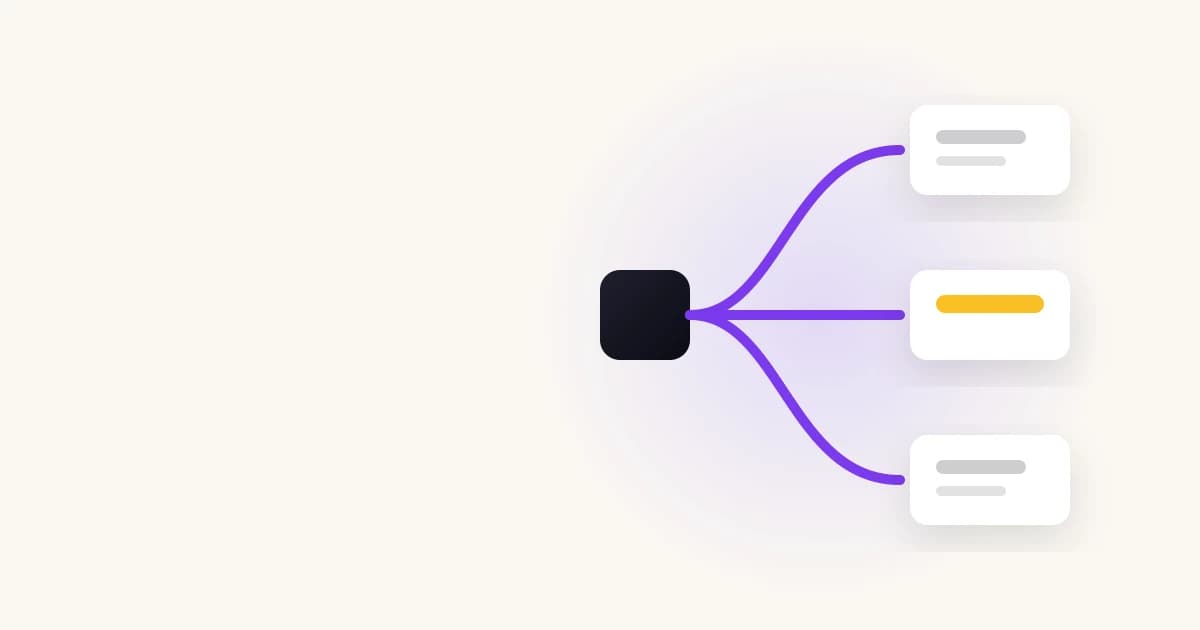
The idea is simple. Between the click and the offer, the visitor answers a few questions. The answers decide what they see next: a short result written for where they are, ending on the offer that fits them.
Here's how it looks for different sellers:
- A consultant asks about company size and the problem, then sends small businesses to a fixed-price audit and larger ones to book a call.
- A course creator asks about experience and goals, then sends beginners to the foundations course and experienced students to the advanced program.
- A software company asks about team size and use, then sends each visitor to the plan that fits, or to a demo when the setup is complex.
- A store asks what the product is for and a couple of preferences, then sends shoppers to the right product, bundle or category. In e-commerce this is called guided selling.
- A local business asks what the customer needs, then sends them to the right service and the right booking or quote form.
The result page does two jobs. It answers the doubt the visitor came with ("yes, this works for a team of three"), and it removes the choice, with one clear button to the offer that fits.
Ask what the visitor needs, answer their doubt, and give them one offer, not five.
What the evidence says
Asking first isn't a new trick, and some companies have published what it did for them. Read every one of these as evidence that it can work, not as a promise of what it will do for you.
- Geologie, a skincare brand, sends its ad traffic to a quiz before the product. The share of quiz-takers who went on to buy rose from 9% to 13% (Octane AI case study). The figure comes from the quiz vendor.
- Jacked Up Fitness, which sells gym equipment from about $800 to $5,000, ends its quiz on a purchase or a demo booking. Quiz-takers spent 47% more per order than visitors who didn't take it (Octane AI case study). Also vendor-reported, and the people who choose to take a quiz may differ from those who don't.
- eBay ran a controlled A/B test in which each page adapted to the shopper, against the same page for everyone. Purchases rose by 7.34% (Lo et al., RecSys 2021). That's personalized recommendations rather than questions, but it tests the same principle: different visitors respond to different offers.
These are other companies, with their own offers and traffic. The useful takeaway isn't a number to expect; it's that adapting the offer to the visitor is a lever worth testing on your own page, against your own numbers.
The evidence says asking first can work; only your own numbers say whether it works for you.
How to design the questions
Good questions do one of three things: work out who the visitor is, what they need, or what's stopping them. Everything else is decoration.
Start from the offers, not from the questions. List what you sell and who each offer is for. Then ask only what you need to tell those people apart. If two answers lead to the same offer, you probably don't need the question.
Keep it short. Each question is a chance to leave. A cheap offer deserves a handful of questions at most; an expensive one, where the visitor expects to be qualified before a call, can take more. For expensive offers, see application funnels for high-ticket offers.
Use the visitor's words. "What's your biggest problem with getting clients?" beats "Select your primary acquisition challenge".
Make the result useful on its own. A result that just says "Plan B is for you!" wastes the answers. Use them: say why this offer fits what they told you, and answer the doubt behind their answers.
End on one action. The result should end on a single button to the right offer: a checkout, a booking page, a quote form. A second, smaller link for those who aren't ready (a cheaper option, or leaving an email) keeps them from vanishing.
Map answers to offers, ask the minimum, and make every result end on one clear next step.
Where asking first fails
It's not the right tool for everything.
- When the page itself is unclear. If visitors can't tell what you sell or don't believe you, a funnel sends them to a page that still doesn't convince them. Fix clarity and proof on the page first.
- When people already know exactly what they want. A shopper searching for a specific model wants search and filters, not questions. We compare the two in guided selling vs filters.
- When there's nothing to choose and no doubt to answer. One product, one obvious buyer, no objections: the questions add a step and nothing else.
- When it's too long or feels like a test. Too many questions, or questions that feel like an exam, lose people before the result.
- When the visitor has a question you didn't plan for. A fixed set of questions can't handle the unexpected; a conversation can. We weigh the two in quiz vs live chat for sales.
Ask first when visitors differ and have to choose; skip it when they already know what they want.
How to measure it
Don't judge it on how many people finish the questions. Judge it on what happens after: how many visitors, out of everyone who started, clicked through to an offer, and how many bought or booked. Compare that with what the page did on its own over the same number of weeks.
This is what Snacked is built around. You paste your sales page's URL; it reads your offers, prices and links, and writes the questions and results, each ending on one of your offers. It counts the clicks to each offer on every plan, and sales once you add its snippet to your thank-you page. It doesn't bring traffic or take payments, and a funnel holds up to eight offers, so a large store points it at categories or collections rather than every product.
To recap:
- One page has to give one answer to visitors who need different ones; asking first lets each get theirs.
- Design from your offers: ask only what tells your buyers apart, and end every result on one clear next step.
- Fix clarity and proof on the page first, then measure asking first on sales or bookings against your own page.
Not sure whether your page needs this or a rewrite? The free sales page grader checks the five reasons visitors leave and tells you which ones a funnel in front of the page would change.
Keep reading
A Simple Sales Funnel: What Small Sellers Actually Need
You don't need a ten-page funnel machine. A simple sales funnel for small businesses: traffic, a few questions, the right offer, and email for the not-ready.
Quiz vs Live Chat for Sales: Which Helps Visitors Buy?
Live chat answers any question but needs someone, or a bot, to reply. A short question funnel works at any hour but can't improvise. When each wins, and why.
Personalized Landing Pages: What Works When You're Not Amazon
Three ways to personalize a landing page: by traffic source, known data, or asking. What each needs in data, tools and traffic, and which fits a small site.