Quiz vs Live Chat for Sales: Which Helps Visitors Buy?
Live chat answers any question but needs someone, or a bot, to reply. A short question funnel works at any hour but can't improvise. When each wins, and why.
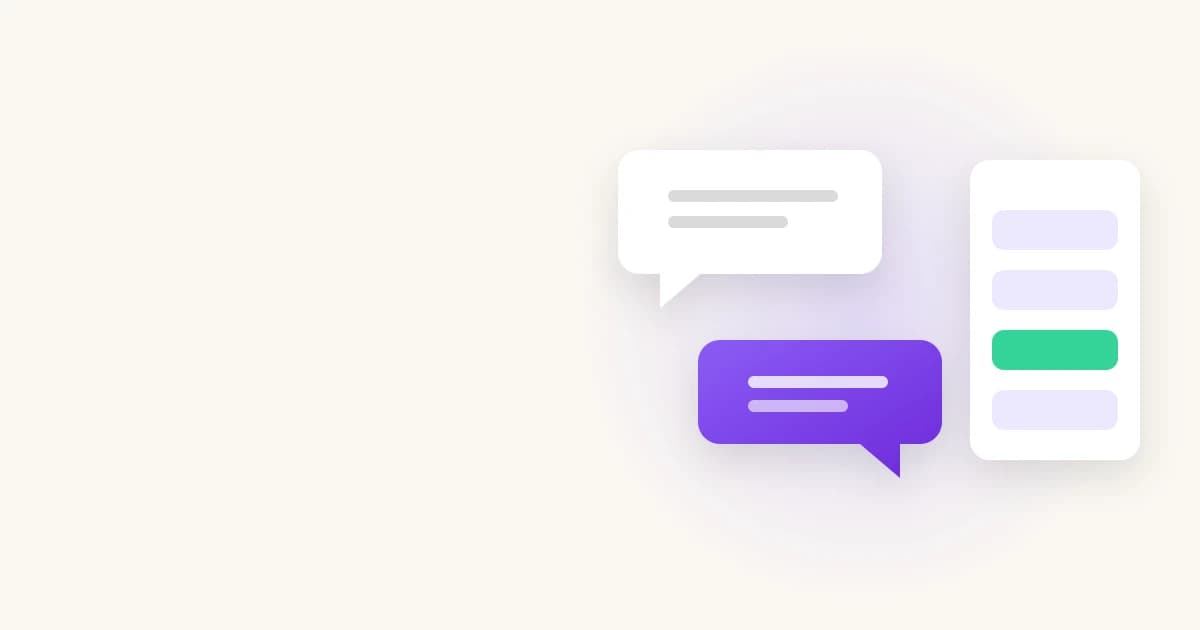
Live chat and a short question funnel both try to do what a good salesperson does: find out what the visitor needs, then point them to the right thing. Chat can answer anything but waits for the visitor to start; a funnel asks first but can only ask what you planned. They're good at different jobs, and the best setups use both. This is part of our guide to asking before you sell.
What each one is
Live chat is a chat window on your site. A person on your team answers, or a chatbot does, or a bot handles the first messages and hands over to a person. The visitor types whatever they want and gets an answer.
A question funnel is a short set of questions in front of your offer: what do you need, what's your situation, what's your budget. The answers lead to a result written for that visitor, which ends on a button to the offer that fits. Some people call it a quiz. In a sales context it's closer to a guided conversation with a script.
Both start from the same insight: a sales page says the same thing to everyone, and visitors buy more when someone helps them work out what fits.
Chat waits for the visitor's question; a funnel asks its own.
Where live chat wins
It handles the unexpected
A visitor wants to know if the course works on a Chromebook, if you ship to Norway, or if the coaching package can start after the holidays. No funnel planned for those. A person answers them in seconds and keeps the sale alive.
It works for complex and expensive offers
When a deal is big and every buyer is different, a real conversation is hard to beat. Chat can turn into a call, and the call closes the deal. For an agency selling five-figure projects, a chat that books a meeting may be worth more than anything else on the site.
It hears objections in the visitor's own words
Every chat transcript is free research. You see the exact doubts people have, in their own words. That's valuable even if chat itself brings few sales: it tells you what to fix on the page.
Chat wins when the questions are unpredictable and each sale is worth a conversation.
Where live chat struggles
Most visitors never start it
Chat waits for the visitor to type first. Many visitors with a doubt don't: they don't want to bother anyone, don't know what to ask, or assume they'll be sold to. They close the tab instead.
Someone has to answer
Live chat with a person needs someone online, ideally at the hours your visitors arrive. A visitor at 11pm who gets "We'll reply within 24 hours" has usually gone by then. Covering the hours costs staff time; not covering them leaves a closed sign on the door.
Bots answer, but don't always help
A chatbot covers the hours, and modern ones answer a lot. But a bot answering questions isn't the same as a bot guiding a decision. A visitor who doesn't know what to ask gets little from a box that says "How can I help?". And a bot that gets a price or a policy wrong costs trust.
Chat struggles with the visitors who don't know what to ask, which is often most of them.
Where a question funnel wins
It goes first
The funnel doesn't wait for a question. It asks the first one: "What are you looking for?" Visitors who would never open a chat window will often tap an answer, because it costs nothing and promises a useful result.
It works at any hour, the same way every time
Nobody needs to be online. The visitor at 11pm gets exactly the same guidance as the one at 11am, and it never gets a price wrong, because you wrote it.
It's built to decide
A funnel is made for one job: work out which offer fits and send the visitor there. Every question narrows the choice. The result explains why this offer fits them and ends on one button. For a seller with a few offers, or several kinds of buyer, that's the whole problem. We go deeper in one sales page, many buyers.
It's easy to measure
Every visitor goes through the same steps, so you see where they drop off, which results they land on and how many click through to each offer. A chat transcript is rich, but hard to count.
A funnel wins when visitors need help choosing, at any hour, and most of them wouldn't ask.
Where a question funnel struggles
It can't improvise
A funnel only asks what you planned and only knows what you wrote. A visitor with an unusual question gets no answer from it. That's why the result page should always leave a way to ask: a contact link, an email, or the chat.
Too many questions lose people
Each question is a chance to leave. A funnel that asks twelve questions to recommend one of two products is worse than the page on its own. Keep only the questions that change the result.
It can't fix a weak offer
If the offer at the end isn't clear or isn't convincing, sending visitors to it more accurately doesn't help. The funnel gets them to the right page; the page still has to sell. Why your sales page isn't converting covers what to check there.
A funnel can only follow the script, so write a good one and leave a way out for everything else.
Side by side
| Live chat (person or bot) | Question funnel | |
|---|---|---|
| Who starts | The visitor | The funnel |
| Handles unexpected questions | Yes | No |
| Helps visitors who don't know what to ask | Weakly | Yes, that's its job |
| Works at any hour | Only with a bot | Yes |
| Needs ongoing staff time | Yes, unless it's a bot | No, once it's set up |
| Easy to measure | Partly | Yes, step by step |
| Best for | Complex, high-value sales; odd questions | Choosing between offers; unsure visitors |
They solve different problems, so the real question is which visitors you're losing.
Use both
They don't compete for the same visitor. The funnel catches the many who are unsure and would never type a question. Chat catches the few with a specific question the funnel can't answer.
A simple setup:
- Put the funnel in front of your offer, so unsure visitors are guided to the right one.
- On each result, add a small "Still have a question?" link to your chat or contact page.
- Read the chat transcripts every month. The questions that come up again and again belong in the funnel's results, or on the page.
If you want the funnel part without building it, Snacked writes it from your URL: it reads your pages and offers, then builds the questions and the results, each ending on a button to your checkout or booking page. It isn't a chatbot and doesn't hold conversations; it asks a fixed set of questions and counts clicks to each offer on every plan.
Let the funnel guide the many and the chat answer the few.
Conclusion
To recap:
- Chat answers anything but waits for the visitor to start; a funnel asks first but only knows what you wrote.
- Chat suits complex, expensive sales and unusual questions; a funnel suits visitors choosing between offers at any hour.
- Use both: the funnel guides, the chat catches what the funnel can't, and the transcripts improve the funnel.
For the full case for guiding visitors before the offer, read ask before you sell. To see whether your page leaves unsure visitors with nowhere to go, run it through the free sales page grader.
Keep reading
A Simple Sales Funnel: What Small Sellers Actually Need
You don't need a ten-page funnel machine. A simple sales funnel for small businesses: traffic, a few questions, the right offer, and email for the not-ready.
Personalized Landing Pages: What Works When You're Not Amazon
Three ways to personalize a landing page: by traffic source, known data, or asking. What each needs in data, tools and traffic, and which fits a small site.
One Sales Page, Many Buyers: Send Each to the Offer That Fits
When different people visit the same sales page, one message can't fit them all. How to split them by asking, and send each one to the offer made for them.