You Don't Own Your Followers (And Why It Costs You Money)
Your 50,000 followers are a lease, not a deed. The economics of owned vs rented audience, with platform-risk math and the path to actually owning it.
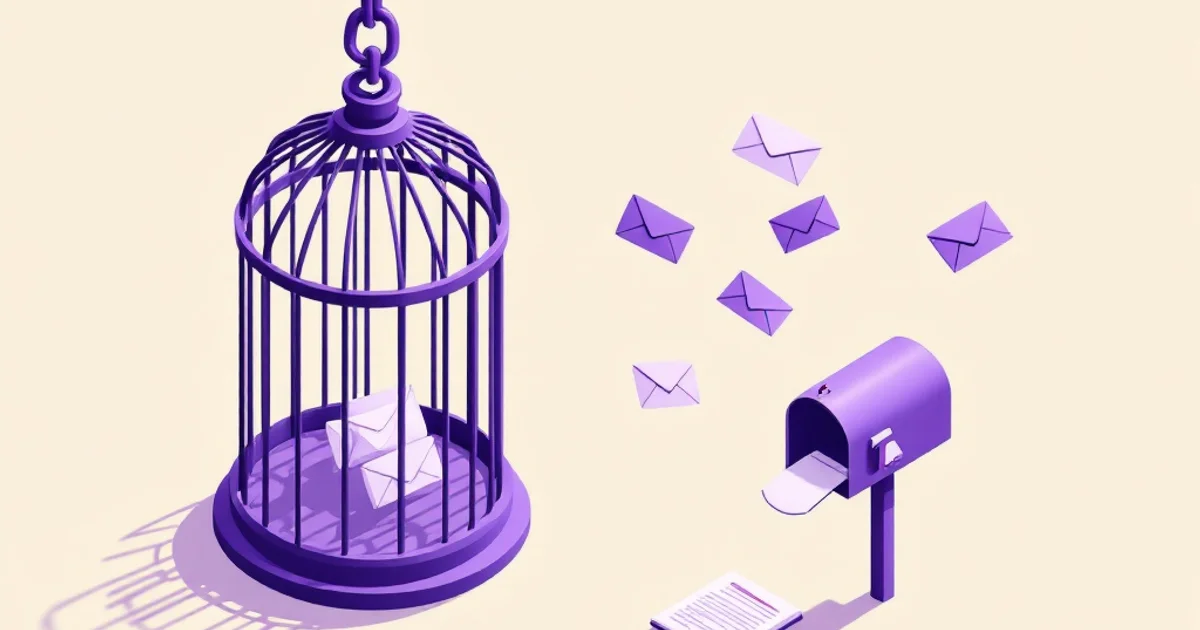
You worked hard for those 50,000 followers. The late-night edits, the algorithm chasing, the captions rewritten four times. None of that is wasted. But there is a sentence worth sitting with: the followers are not yours. They live on someone else's server, are shown to someone else's idea of who they are, and can be taken away on a Tuesday with a policy update you did not see.
This article is the awareness piece in our audience ownership series. It is not a tactical playbook. It is the moment of realisation that has to come before the playbook makes sense. By the end you will know, with arithmetic, what your follower count is actually worth, what an owned subscriber is actually worth, and what the gap costs you every month you delay closing it.
In this guide
- The receipt nobody asked for: Vine, Periscope, and the long tail
- Followers are a lease, not a deed
- The math: revenue per follower vs revenue per subscriber
- What "ownership" actually means in 2026
- The 2026 demonetization wave is the warning shot
- Why this is harder than it sounds
- The smallest viable ownership layer
- How to start before you "have time"
- Where this leaves you
The receipt nobody asked for: Vine, Periscope, and the long tail
October 27, 2016. Twitter announces Vine is shutting down. Two months later the app is gone. The platform had built six-second video into a culture and minted careers around it. Logan Paul had 9.5 million Vine followers, Lele Pons had 8.3 million, King Bach had 16 million. The ones who survived had already moved audiences to YouTube, Instagram, or email. The ones who had not survived disappeared from the public internet within a year.
Periscope shut down in March 2021. Live-streaming on Twitter, four years of investment by creators who built audiences inside it, gone. Twitter offered a path to download your broadcasts. It did not offer a path to bring your audience with you. The audience was never theirs to transfer.
You can call those edge cases. Then look at TikTok. Between January 2024 and January 2025, the US TikTok ban was three times days-away from removing the app entirely, three times reversed by executive order, and ended in a forced-sale framework whose final form was still being negotiated into 2026. Millions of US-based creators spent twelve months with the actual fact of their business existing or not existing pending in court. That uncertainty did not invent platform risk. It surfaced what had always been true: distribution is access the platform grants and can revoke.
The pattern is not new. MySpace, Friendster, Google+, Vine, Periscope, Mixer, Fab, the Facebook page reach collapse of 2014-2018, the Instagram organic reach collapse of 2018-2024, the YouTube subscribed-feed deprioritization that happened quietly between 2019 and 2022, the Substack writer migrations of 2024, and now the TikTok limbo. Each of these stories ends the same way for the people who treated the platform as their home: the ones with email lists kept their audiences and the ones without did not.
Every platform that has ever existed has eventually betrayed the creators who treated it as a home.
Followers are a lease, not a deed
Here is the distinction that does the work in this article. A follower is a person who has agreed to let a platform show them your stuff, sometimes, when the platform feels like it. A subscriber is a person who has given you a direct line of contact that you control.
Those two things look similar from the outside. They are different by an order of magnitude in what they enable.
A follower is rented attention. You do not have their contact information. You cannot reach them when the platform throttles your reach, raises your ad cost, deprioritizes your topic, suspends your account, or shuts down. You cannot move them to another product or platform without losing most of them in the move. You cannot even reliably tell which followers are still active and which are dormant accounts the platform still counts in your total.
A subscriber is owned attention. You have their email or their phone number. You can reach them on a day the algorithm hates you. You can move them to a different platform tomorrow. You can know which ones opened the last message and which ones have not engaged in six months. You can sell to them, segment them, survey them, and ask them questions. None of that requires the platform's permission.
The lease-versus-deed framing is useful because it makes the trade-off legible. A tenant builds equity for the landlord. A landlord builds equity for themselves. Most creators in 2026 are excellent tenants. They have made the landlords rich and themselves dependent.
Followers build equity for the platform. Subscribers build equity for you.
The math: revenue per follower vs revenue per subscriber
This is the part that hurts. Let us walk through the actual arithmetic with real benchmark numbers from 2026.
Start with reach. Instagram organic reach in 2026 sits in the 7-8% range per post, down from 18% in 2019 and from 30% in 2016. That number is the median across business accounts. For a creator with 50,000 followers, a single post reaches roughly 3,500-4,000 of them on average. Reels do better, story posts do worse, and the variance from post to post is wide. The decline has been steady, not cliff-edged, and it has been one-directional. There is no scenario in which platforms make organic reach more generous over time.
TikTok has held up better at the median level. But TikTok's distribution is decoupled from follower count almost entirely. Your viral video on TikTok reached 800,000 strangers, not your followers. Your next video might reach 4,000. The platform is showing your content to the For You Page, not to your followers, and the For You Page rotates by topic, format, and recency, not by audience loyalty. A creator with 200,000 TikTok followers has roughly the same expected reach on a new post as a creator with 20,000 followers in the same niche.
Now revenue. Industry benchmarks for influencer revenue per follower per month land around 0.005 to 0.02 dollars in most non-shopping niches and up to 0.05 to 0.10 dollars for high-commercial-intent niches (finance, beauty, fitness software). Call it 0.01 dollars per follower per month on average. A creator with 50,000 followers monetizes that audience for roughly 500 dollars per month through sponsorships, affiliate links, and platform payouts combined. That is a real number, not optimism. Many do worse.
Revenue per email subscriber in the creator economy in 2026 sits in a wildly different range. Newsletter benchmarks from ConvertKit, Beehiiv, Substack, and the independent operator-shared spreadsheets put revenue per active email subscriber at 1 to 4 dollars per month for niche newsletters and 5 to 15 dollars per month for newsletters with a paid tier or a product attached. Even at the low end, a 5,000-person email list generates more monthly revenue than the 50,000-follower account that fed it.
The ratio is roughly 100 to 500 times. One email subscriber is worth between 100 and 500 followers in dollars-per-month, in 2026, in most creator niches. That is not because subscribers are magic. It is because you can reach them, sell to them, and re-engage them at a marginal cost of close to zero, none of which is true of followers.
A second number is worth carrying. The reach difference between a viral post and a normal post on Instagram or TikTok is roughly 50 to 200 times. The reach difference between a sent email and an unsent email is zero, because every sent email reaches every active subscriber. Email is the only channel in the creator stack where reach is a deterministic function of effort, not of algorithm sympathy.
Walk through the implication on a real revenue model. A creator with 100,000 Instagram followers and no email list runs roughly 4 brand deals a quarter at 1,500 dollars each, plus affiliate income of 300 a month, plus occasional ad-rev share of 200 a month from Reels bonus programs. That is 8,500 a quarter, or about 2,800 a month gross. The same creator with 100,000 followers and a 7,500-person email list (a 7.5% follow-to-subscribe ratio, which is conservative) can run a 49-dollar mini-product to a 2% list-quarterly conversion and add 3,675 dollars per quarter from owned channels alone, with no extra brand-deal load and no extra dependence on whether Instagram pushes the next Reel. The list, at less than a tenth the size of the follower count, generates more incremental revenue per quarter than the entire follower-derived stack.
The model gets sharper with a paid newsletter or a 12-month course. A 7,500-person list with 4% on a 9-dollar-a-month paid tier is 2,700 dollars in monthly recurring revenue, which is income the algorithm cannot decide to take away on a Tuesday. The math is not exotic. It is what every operator-level creator who is still in the game in 2026 has already run for themselves.
There is a sharper second-order point. Revenue from followers is brittle in a way revenue from subscribers is not. Brand deals dry up when the follower count plateaus or the engagement rate slips. Platform payouts move on a knob the platform controls. Affiliate links lose tracking when iOS deprecates another cookie. Subscriber revenue, once it exists, decays slowly and predictably. You can model the next twelve months of subscriber revenue with an error bar of 20-30%. You cannot model the next three months of follower-derived revenue with an error bar that small, because every model assumption is downstream of someone else's product decisions.
A 5,000-person email list out-earns a 50,000-person follower count in most creator niches, by an order of magnitude.
What "ownership" actually means in 2026
The word "owned" gets used loosely. It is worth being precise.
An owned channel is one where the relationship between you and the person on the other end exists outside any single company's ability to revoke it. Email is the canonical owned channel because it has standard interoperability: you can move your list from ConvertKit to Beehiiv to ActiveCampaign to a self-hosted Postmark setup in an afternoon, and the recipients do not know or care. SMS works similarly through any provider that respects the underlying carrier protocols. RSS, when readers use it, is fully owned. Your own website, when it is on a domain you own and a host you can leave, is owned.
What is not owned: anything where the contact graph lives inside one company. Instagram followers are not owned. TikTok followers are not owned. YouTube subscribers are not owned (try emailing your YouTube subscribers — the channel does not exist). Twitter followers are not owned. Discord servers are not owned. Patreon supporters are not owned (Patreon has changed payout terms and content rules unilaterally many times). Telegram channel subscribers are not owned. LinkedIn connections are not owned.
The litmus test: if the platform froze your account tonight, who could you still talk to tomorrow?
A second test: if you wanted to move to a different platform, what fraction of your current audience could you bring with you? For an email list, the answer is close to 100%. For Instagram, the answer is whatever fraction you can convince to also follow you on the new platform, which historically settles around 5-15% even when creators are aggressive about cross-promotion.
There is a middle category worth naming: semi-owned channels. A direct-to-customer Shopify store is semi-owned because Shopify could change its terms, but you control the domain, the customer email list, and the data. A self-hosted blog on your own domain is fully owned for the content but partly dependent on Google for traffic. A podcast feed published through a host like Transistor or Captivate is fully owned because the RSS feed is portable and listeners subscribe to the feed, not to the host. Your podcast audience does not know or care if you change hosting providers, the way your Instagram audience would care if you switched platforms.
The mental model that helps: think in terms of the contact graph. Anywhere you can export the contact graph as a CSV and import it somewhere else, you own the audience. Anywhere you cannot, you do not.
If you cannot export the contact graph, you do not own the audience.
The 2026 demonetization wave is the warning shot
YouTube rolled out a monetization policy update on July 15, 2025, that broadened the criteria for demonetization to include AI-generated content without "meaningful human input," content that "reuses" others' material without sufficient transformation, and certain mass-produced niches. Within four months, multiple million-subscriber channels in animation, true crime narration, and stock-footage compilation had been demonetized partly or entirely.
DinoMania (1M+ subscribers) was demonetized in late 2025. Blunt Brothers Productions (1.3M subscribers) was demonetized the same quarter. SlicK (825K subscribers) was demonetized shortly after. These were not edge cases. These were creators with audiences larger than most local newspapers, who built careers inside one platform's monetization framework, and whose income disappeared on a policy interpretation they could not appeal.
The point is not that YouTube was wrong. The point is that YouTube was unilateral. The creators had no negotiating position because they were tenants, not landlords. The platform decides which apartments still have heat.
The 2026 wave is not the first wave. Adpocalypse 1.0 in 2017 demonetized vast swaths of political and news content. Adpocalypse 2.0 in 2019 hit children's content creators after the FTC settlement. The 2024-2025 wave is hitting AI-adjacent and reuse-adjacent creators. The 2027 wave will hit something else. There is always a next wave because platforms exist to maximize their own surplus, and demonetization is the cheapest way to do that when ad-buyer pressure mounts.
The Substack writer migration of 2024 was the same pattern in reverse. When Substack made content-policy decisions that several large writers disagreed with, those writers left. The ones with email lists kept their audiences. The ones without lost their newsletters' worth of distribution overnight. Beehiiv picked up most of the migration. Ghost picked up the rest. The point: even on a "writer-friendly" platform that gives you the email addresses on export, you still do not control the policy.
A creator earning 30,000 dollars a month from YouTube AdSense who has not built an email list is one policy update away from a 90% income cut. A creator earning 30,000 dollars a month from a newsletter and a paid community is one policy update away from approximately zero income loss, because the policy in question is not theirs to update.
There is a useful historical lens here. Search Google for "Adpocalypse" in a Wayback Machine timeline view and you can read the contemporary blog posts of creators who got hit in each wave. The pattern is identical across waves. Creators describe themselves as blindsided. They describe the platform's communication as opaque. They describe the appeal process as designed to fail. Then they describe what they are doing next, and the answer is always the same three things in some order: starting a Substack, starting a Patreon, starting a podcast. They are reaching, mid-crisis, for the ownership layer they should have built before the crisis.
The cost of building it before the crisis is roughly one evening a week for three months. The cost of building it during the crisis is most of the audience you would have brought with you, because there is no list to email, no podcast subscribers to notify, no website to direct people to. The arithmetic favors building early to such an absurd degree that the only honest explanation for why creators do not is the one we covered in the previous section: dopamine, activation cost, and the seduction of distribution.
Platforms always optimize for the platform. They warn you with policy updates and you keep building anyway.
Why this is harder than it sounds
If the math is this stark, why does almost nobody act on it?
There are three forces, and they are real, not lazy.
The first is the dopamine gap. Posting on Instagram or TikTok and getting 50,000 views in a day feels immediate, public, and validating. Sending an email to 500 subscribers and getting 4 replies feels small, even when the 4 replies are worth more than the 50,000 views in revenue and relationship terms. The platforms have spent two decades training the creator's reward system. Email feels quiet. Quiet is correct, and also painful.
The second is the activation cost. Building a follower count is a single skill: make content people like. Building a subscriber list is several skills layered: capture mechanism, opt-in incentive, welcome sequence, ongoing cadence, monetization choice. Each one is a job. Most creators have one job already (making the content). The new infrastructure looks like a second job, and the second job's payoff is not visible for weeks.
The third is the network effect of distribution. Instagram and TikTok will reward you with reach the day you post. Your newsletter will not reward you with subscribers the day you post the link. The platforms are giving you a 0-to-something curve that bends fast. The email list is a flat line that you have to bend yourself. The platforms know this. It is why their best feature is always discovery and their worst feature is always retention.
These three forces are why creators have known about platform risk for fifteen years and still mostly do not act on it. The forces do not go away because you read this article. They go away because you build a system that defangs them, which is the only thing the rest of this argument cares about.
There is a related trap that costs creators years: the assumption that building a list is something you do once your following is "big enough." There is no big-enough number. A creator at 1,000 followers should be capturing emails. A creator at 100,000 followers should be capturing emails. A creator at 5 million followers should be capturing emails. The conversion economics work at every scale, and the platform risk is identical at every scale. Waiting until you are bigger means waiting until you have more to lose.
The hardest part of owning your audience is admitting that follower count was never the point.
The smallest viable ownership layer
If the argument lands, the next question is what to do tonight. Not next quarter. Tonight.
The smallest viable ownership layer is one email-capture mechanism, one place to send those emails from, and one cadence that gets the next email actually sent. That is the minimum complete system. Anything less is not a system. Anything more is premature optimization.
The email-capture mechanism does one job: turn anonymous attention into a known contact. This is where most creators reach for a free PDF lead magnet and watch it convert at 3%. There are better options in 2026. A scored quiz that segments people as they opt in converts in the 25-40% range, captures more useful first-party data, and primes the first email of the sequence to feel personal rather than generic. (Snacked exists for exactly this; that is its job. But the mechanism matters more than the tool. Use whatever gets you a working capture today.)
The send-from-this place can be a free ConvertKit, Beehiiv, or Substack account. The choice does not matter at the smallest scale. The thing that matters is that the contacts live somewhere you can export from. Every tool worth using has a one-click CSV export. Confirm that before you start.
The cadence is the part that breaks. A welcome email goes out the day someone subscribes. A second email goes out three days later. A third goes out a week after that. None of them have to be long. None of them have to be polished. They have to exist. A 200-word email that arrives is worth infinitely more than a 2,000-word email you are still drafting.
Most operators get this wrong by trying to design the perfect 7-day sequence before sending the first message. The sequence converges through contact with subscribers, not through whiteboard planning. Start with three emails. Send them. Watch which ones get replies. Rewrite based on the replies. The whole exercise should take two weeks of evenings, not a quarter.
If you want a deeper walkthrough of how to build the next four emails after the welcome and how to pick a cadence that does not burn the list, the email list playbook is the next stop in this series.
A list of 100 people who got two emails from you is more valuable than a plan for 10,000 people who got none.
How to start before you "have time"
The honest objection is time. Creators are already saturated. The platforms demand constant feeding. Adding a new system on top of that load feels impossible.
Here is the reframe that works. The first email list does not require you to do more work. It requires you to do the same work differently. Every video, every post, every newsletter sent through someone else's tool, every podcast episode is already attempting to attract attention. The change is to route a fraction of that attention into a list.
Three moves, in order, each one finishable in an evening:
- Add the capture to one piece of distribution. Pick your highest-traffic surface (the link in bio, the pinned Reel, the YouTube channel description, the podcast show notes) and put one CTA there that goes to one capture mechanism. Not five. One. The friction of choice kills click-through.
- Send one email this week. The content does not matter. "Here is what I am working on, here is what I read this week, hit reply if you want more of this." Three paragraphs. The act of sending an email is the act that makes the list real to you and to the subscribers.
- Run that loop for thirty days. One capture mechanism, one email per week. After 30 days you will know whether the capture rate is workable, whether the audience responds, and what to invest in next.
The 30-day cycle works because it produces evidence. Most creators stuck at zero email subscribers are not stuck because the work is hard. They are stuck because they have not run the experiment. The first month of running it removes most of the abstract anxiety and replaces it with a small concrete operating system.
A note on platform-native captures. Instagram lead forms, TikTok lead-gen ads, and YouTube end-screen subscribe buttons are all platforms pretending to be capture mechanisms. They are not. The "subscribers" they collect either live inside the platform (YouTube subs) or are routed through the platform's ad delivery system (Instagram and TikTok lead forms) and you do not own the contact graph in any operational sense. Use them, if you want, as top-of-funnel awareness, but the real capture has to land in a destination you control. The platform is a discovery layer. The email is the actual contact.
You do not need more time. You need to redirect a fraction of the attention you are already producing.
Where this leaves you
The point of this article was not to make you anxious about Instagram. It was to make a small number visible: the gap between what your follower count is actually worth and what an owned subscriber is actually worth.
The three sentences worth taking with you:
- A 5,000-person email list out-earns a 50,000-person follower count by a factor of 10 to 100, because reach to subscribers is deterministic and reach to followers is not.
- Every platform eventually changes the terms. The creators who survive are the ones who built the ownership layer before they needed it.
- The minimum viable ownership system is one capture mechanism, one sending tool, and one weekly email. Not more. Tonight, not next quarter.
The companion read is the follower-count vanity-metric breakdown, which has the math behind why account size decoupled from revenue years ago. The next step in the series is the email list playbook, which is the tactical follow-up to this strategic argument.
You worked hard for those followers. That work is not wasted. It becomes ten times more valuable the moment you give the people on the other end of it a way to reach you that the platform cannot interrupt.
Keep reading

Your 50,000 Instagram Followers Earn You Zero
You spent five years getting to 50k followers. Quick math: at 7% organic reach, $0.0001 RPM, what is that account worth per month? Spoiler: not much.

The Day Vine Died, the Top Creator Lost $2.4M
October 27, 2016. Twitter shuts Vine down with 90 days notice. The top creator had a 6-figure-a-month deal. Watch what happens next, and what they did wrong.

The Modern Email List Playbook: Build, Engage, Monetize
Most email-list guides hand you a pile of tactics and skip the order. This is the playbook in four stages: setup, first 100, first 1,000, and revenue.